
Real Cost of Owning a Sur-Ron in 2026?
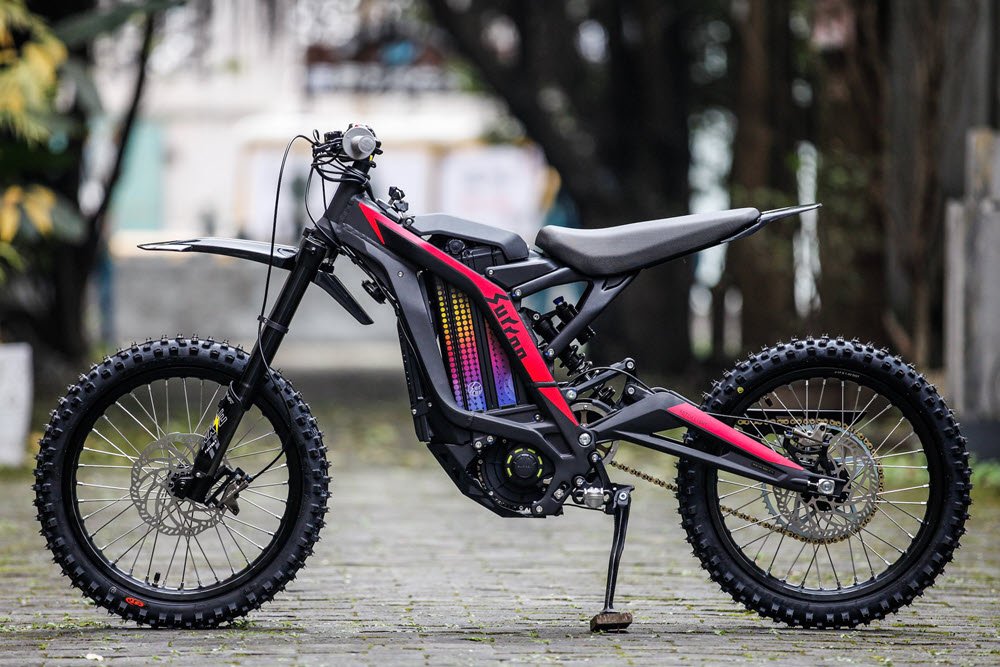
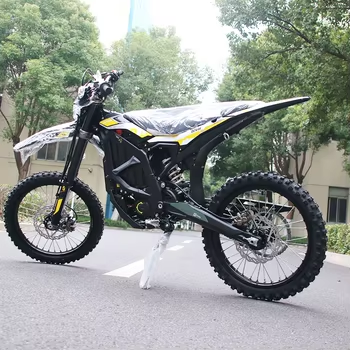
Owning a Sur-Ron electric dirt bike is a fun idea: it has quick power, runs quietly, doesn’t need much daily care, and can handle places where gas bikes feel slow or hard to ride. But besides the excitement, people who want to buy one should think about: what’s the real cost of owning it? Not just the starting price — but the total cost over time: things like charging, replacing parts, batteries, upgrades, insurance, registration, and selling it later.
This article goes through every cost you should be aware of, with real numbers from 2025, real-life examples, and tips on how to save money over time.
Whether you’re planning to buy your first cost of owning a Sur-Ron or comparing it to gas bikes, this is the detailed guide you need.
Executive summary — the headline answer /cost of owning a sur-ron
Upfront cost: You can expect to pay around $3,500 to $5,000 for a regular 2025 Sur-Ron Light Bee or Light Bee X model from trusted dealers. The price may change based on the model, battery type, and where you buy it.
Cost of owning a Sur-Ron.
Extra stuff and safety: You should budget $200 to $1,200, depending on how much protection you need and if you want to follow the rules legally.
Yearly costs: You’ll spend about $300 to $700 each year on tires, brake pads, and small repairs.
This might go up if you ride hard or race.
Battery cost: This is a big expense.
You can expect to pay $800 to $2,500 for a new battery, depending on whether you go with the original brand, a third-party option, or a high-capacity aftermarket one. Third-party batteries usually cost between $1,600 and $2,500.Cost of owning a sur-ron.
Charging money: This is very low.
A full cost of owning a Sur-Ron battery usually costs less than $1 at standard home electricity rates. Sometimes it can be as low as $0.25 to $1, depending on how much power the battery uses and how efficient it is.
Reddit
Over 3 to 5 years, if you take good care of your Sur-Ron, the total cost including all parts and upgrades will be between $7,000 and $10,000.
This is often better than small gas motorcycles when you include fuel, regular engine work, and the loss in value over time. Cost of owning a sur-ron.
How I calculated these numbers (methodology)
This is important — the numbers can change depending on where you are, how you ride, and which model you have. To give you realistic and helpful estimates, I:
Checked the current 2025 prices from manufacturers and big stores for the Sur-Ron Light Bee and Light Bee X models.
Looked at battery sizes and the range claims from the makers (like Wh and Ah numbers) to figure out how much energy is needed to charge and how much it cost for owning a su-ron and to charge once.
(Sur-Ron usually lists 60V/40Ah or similar batteries in their 2025 specs; that adds up to about 2,400 Wh — or 2.4 kWh).
Ampd Bros Electric Bikes
Talked to people in online communities and looked at prices from places that sell replacement and upgraded batteries (most of these cost between about $1,500 and $2,500).
Checked posts from riders and test results to find out real-world charging costs and how much energy is used per mile.
This helps me estimate typical costs per mile and how much efficiency might drop when carrying extra weight. Cost of owning a sur-ron.
Made up different riding situations, like a daily commuter, someone who rides on weekends, and someone who uses the bike a lot, to show a range of possible total costs over time and cost of owning a sur-ron.
Where I could, I showed the math clearly — so you can use your local electricity price, how many miles you ride, and any area-specific fees to calculate it yourself
Upfront purchase price (models, trims, cost of owning a sur-ron in 2026)
2.1 Sur-Ron model landscape (brief primer)
In 2025, Sur-Ron price 2025 for main bikes like the Light Bee series and higher-end models like the Light Bee X and Ultra Bee. They also offer different versions for various regions and markets to meet legal requirements. The main things that change the price are: Cost of owning a sur-ron.
The size of the battery (a larger battery means a higher price)
How the motor and controller are set up (models with more power cost more)
The quality of the suspension, brakes, and wheels (better parts cost more)
Special equipment needed for street legality (like lights, mirrors, wiring, and paperwork to get it registered)
2.2 Real dealer prices and examples
From U.S. and global retailer sur-Ron prices in 2025, here are typical price ranges:
Base Sur-Ron Light Bee (basic model): usually priced between $3,500 and $4,400 USD, depending on the dealer and location.
Sur-Ron price 2025 of Light Bee X / higher trim (with a 60V/40Ah battery and more power): typically listed around $4,000 to $4,850, and sometimes on sale for as low as the high $3,000s. Retailers show prices between $3,799 and $4,849 as examples.
Ultra Bee / performance models: these are more expensive, depending on the features, and often range from $4,500 to $6,000 when they include premium parts or factory upgrades.
SURRON PRICE 2025 USA
Main point: if you buy a new Light Bee X that’s ready to ride on the street in 2025 from a trusted dealer, expect to pay roughly $3,800 to $4,800.
Keep in mind that prices might go up if you add shipping, local taxes, or any necessary paperwork to make it street legal.
Required safety gear & legal compliance costs
Having the bike is just one part of the story: to ride safely and legally, you’ll need to wear protective equipment and might also need to register the bike or get insurance.
3.1 Essential protective gear (recommended minimum)
Full face helmet (can be used for off-road or street depending on need): $80–$400
Gloves: $25–$150
Jacket with CE armor or body armor: $80–$600
Boots for off-road use: $80–$300
Goggles or eye protection: $15–$80
If you want a safe setup, you can spend $300–$600 for good protective gear.
If you want the best quality, like a top helmet, good jacket, and strong boots, you might pay $800–$1,200 or more.
3.2 Street-legal compliance (if you want to ride on roads)
Different countries/states have varying requirements. Typical add-ons for L1E or similar street versions include:
Mirrors, lights (headlamp, tail/stop lights, indicators), reflectors, speedometer/odometer (if required), VIN/plate bracket, and registration fees.
Costs may range from $100–$500 for hardware; registration, license plate, and local road taxes can vary significantly.
For example, some UK street-legal packages or dealer efforts can bring the sur-ron price 2025 of a Light Bee L1E close to £4,995 delivered in certain deals (prices may vary by region). Lithium Power.
3.3 Insurance
For off-road bikes, this is often optional but required for road legality. Cost ranges from $100 to $500+ per year, depending on coverage, region, and usage. It offers liability vs. comprehensive coverage. Return only the content. Nothing else. Sur-ron price 2025
Charging costs — cost of owning a sur-ron: tiny fuel bill
One of the strongest financial arguments for electric bikes is the extremely low cost to “refuel.” Let’s do the math.
4.1 Real battery energy numbers
The Sur-Ron Light Bee X often uses a 60V × 40Ah battery in sur- ron price 2025 models — which equals:
60 volts multiplied by 40 amp-hours gives 2,400 watt-hours, or 2.4 kilowatt-hours.
(Other versions might have 32Ah or different battery sizes; check your specific model.)
Ampd Bros Electric Bikes
4.2 Example of charging cost (basic formula)
The cost to fully charge the battery is calculated by multiplying the battery capacity (in kWh) by the local electricity price (in dollars per kWh), and then dividing by the charger efficiency. suro-ron price 2025.
Let’s say:Battery = 2.4 kWh
Electricity price = $0.15 per kWh (this is an average in the U.S., but your rate may be different)
Charger efficiency = 90% or 0.9
Then:Energy used from the power source = 2.4 divided by 0.9 = 2.67 kWh
So the charging cost of sur-ron price 2025 would be 2.67 multiplied by $0.15 = $0.40
That’s 40 cents to charge a 60V × 40Ah battery at $0.15 per kWh.
If electricity costs more, like $0.30 per kWh, the cost would be about $0.80. Many community meter checks show that charging a Sur-Ron battery usually costs less than a dollar per full charge. Cost of owning a sur-ron.
4.3 Cost per mile (based on charging alone)
If one full charge allows you to ride 30 to 45 miles depending on how you ride, then at a cost of $0.40 per charge:
$0.40 divided by 40 miles = $0.01 per mile (one cent per mile). Cost of owning a sur-ron.
Even if you ride aggressively and only get 20 miles per charge, that’s still $0.02 per mile — way cheaper than gasoline.
Key point: the cost of electric power is very low compared to the cost of tires, batteries, or buying the bike in the first place. of sur-ron 2025
Routine maintenance: schedule and costs
Electric dirt bikes like Sur-Ron have fewer moving parts compared to gas motorcycles (no combustion engine, no oil changes), but they still require regular mechanical maintenance to ensure safety and efficiency.
5.1 Typical maintenance schedule and tasks
After the first 50–200 miles: initial check (bolts, chain tension, brake adjustment).
Many dealers perform a first service early. Cost: $30–$100 if done at a shop.
Every 500–1,000 miles: brake pad check/replacement if needed, chain cleaning & lubrication, tire inspection, bearing checks, suspension inspection.
Parts + labor: $100–$300 depending on what’s replaced. .Cost of owning a sur-ron.
Annually: full inspection — bearings, headsets, swingarm, suspension service (may be more frequent for aggressive riders).
Cost: $150–$500 depending on service level and region.
Tires: off-road riding often requires replacement every 1,000–2,000 miles depending on terrain.
Cost per tire: $50–$150.
Brake pads / rotors: pads can be $20–$60 each; rotors $30–$100 depending on quality.
Early aggressive braking increases wear.
Chain & sprockets: chains stretch and sprockets wear. Cost of owning a sur-ron.
Typical replacement cycle: 1,000–3,000 miles depending on maintenance and terrain. Costs: $50–$200 for chain + sprockets.
Suspension service: depending on use, fork/shock servicing every 1–2 years can cost $100–$400 per unit if done professionally. Cost of owning a sur-ron.
5.2 Example annual maintenance budget
Tires (every other year average): $150/year (amortized)
Brake pads & small consumables: $50–$150/year
Chain & drivetrain lubrication/maintenance: $30–$100/year
Periodic shop checkups and small parts: $100–$300/year
Estimated routine annual cost (moderate rider): $300–$700
If you ride aggressively, carry heavy loads, or race, expect to pay the higher end or more. Cost of owning a sur-ron.
Battery care, lifespan, and replacement costs (the big variable)
Battery care, how long it lasts, and how much it costs to replace (the big variable)
Battery packs are usually the most expensive part of electric bikes.
How you take care of them affects how much you’ll spend over time. Cost of owning a sur-ron.
6.1 Types of batteries and their sizes (Sur-Ron context)
Sur-Ron 2025 battery packs are usually around 60V × 32–40Ah, which equals about 2,400 Wh for a 60V×40Ah pack.
Different dealers and models may have different versions. Some aftermarket packs offer higher Ah or different voltages for better performance. Cost of owning a sur-ron,
6.2 How long batteries usually last
High-quality lithium-ion batteries used normally can last between 500 to 1,000 full charge cycles before their power drops to about 70–80% of what they started with.
In real use, this often means 3 to 6 years, depending on how often you charge, how much you use each time, and how you store them. Cost of owning a sur-ron.
Good habits, like charging partially, avoiding deep discharges, keeping them at moderate temperatures, and using a good battery management system (BMS), can help them last longer.
But if you use the bike a lot with deep charges, it can shorten their life. Cost of owning a sur-ron.
6.3 Costs for replacing and upgrading batteries (original vs third-party)
Original Equipment Manufacturer (OEM) replacement battery: If you buy it directly from the dealer or manufacturer, prices vary. Cost of owning a sur-ron.
You can expect to pay between $800 and $2,000 or more, depending on the size and where you’re from. Some dealers and refurbishment options may be cheaper or more expensive.
Third-party or aftermarket packs: The cost is generally between $1,200 and $2,500 for larger capacity packs that are compatible with Sur-Ron (like 70 Ah or 60 Ah versions).
Many community shops and battery specialists list options in the $1,200 to $1,999 range. Cost of owning SUR-RON.
Important note: cheaper packs might use lower-quality cells or have less reliable BMS features, which can cause them to wear out faster or pose safety risks.
It’s best to pick reliable sellers and check for good warranties.
6.4 Example of battery replacement cost calculation
If an aftermarket 60V 50Ah battery costs $1,700 and lasts 5 years, the yearly cost is about $340.
If you need to replace it sooner or buy more than one, the cost will go up.
6.5 Tips to help your battery last longer
Don’t store batteries at 0% or 100% charge for long periods; try to keep them between 30% and 80%.
In cold weather, keep your battery warm because cold lowers its performance and can stress the cells.
Avoid frequent fast charging; charge slower when possible to reduce heat damage. Cost of owning a sur-ron.
Follow the BMS warnings and don’t let the battery discharge too much when you’re using the bike.
Upgrades and modifications: budgets and resale considerations
Upgrades and modifications: budgets and resale considerations
Many Sur-Ron owners make changes or add-ons — like suspension, tires, chain and sprocket ratios, controllers, and battery packs.
These changes can make the bike perform better, but they also cost money and might affect how much someone would pay if they want to sell it later or if it’s still under warranty.
7.1 Common upgrades and price ranges
Upgrading the suspension (better fork or shock): $300 to $1,000+
Controller tune or replacement (for power settings): $200 to $800
High-capacity aftermarket battery: $1,200 to $2,500
Changing sprockets or adjusting gearing: $20 to $150 for parts and labor
Premium tires: $120 to $300 per pair
Protective skid plate, handguards, luggage racks: $50 to $300
7.2 Do upgrades pay off when selling?
Upgrades that make the bike work better, like improved suspension or a bigger battery, can make it more appealing if they’re done right and properly recorded.
But if the bike is heavily changed, some buyers may not want it because they prefer the original version or are worried about things like over-tuned controllers.
Keep your receipts, note all the work done, and keep the original parts for when you want to sell.
This helps you get the best price possible.
Insurance, registration, and local legal expenses — examples by region
These costs depend a lot on where you live and whether you plan to ride only on off-road trails or need a version that can be used on the road.
8.1 United States (example)
If you ride only off-road: you may not need registration or insurance.
Costs are usually limited to dealer fees, shipping, and local sales tax.
If you want to ride on the road (after conversion or homologation): registration and insurance vary by state.
Basic liability insurance can cost $100 to $400 a year, while full coverage might be more expensive.
8.2 United Kingdom (example)
Cost of owning a sur-ron ;Light-legal L1e versions or conversions may need VAT, registration, and a license.
Dealer quotes for street-legal Light Bee models can be between £4,000 to £5,000, including some compliance items. Insurance rates vary based on the policy.
Lithium Powersports
8.3 Europe & Australia
Rules about registration and road use vary across countries.
Some places require full homologation for road use, which can add to the cost. Cost of owning a sur-ron
Bottom line: if you need to ride on the road, plan for an extra $100 to $800 or more for registration and insurance in the first year — costs can vary a lot depending on the area.
Total cost of ownership — sample scenarios (3-year and 5-year)
Below are three realistic owner profiles with estimated costs. The numbers are examples, so you should adjust them based on local electricity and service rates for accurate figures. Cost of owning sur-ron.
Common assumptions used in these scenarios:
– Model: Sur-Ron Light Bee X with a 60V×32–40Ah battery pack (about 2.0–2.4 kWh) bought new.
Price assumed around $4,200.
– Lithium Powersports
– Charging cost assumed at $0.15 per kWh.
– Battery replacement is considered in the scenarios if needed (examples of costs are shown).
– Maintenance and parts costs are based on average estimates. Cost of owning a sur-ron.
Scenario A — Occasional weekend trail rider
– Miles per year: around 600 (about 50 miles per month)
– Purchase price: $4,200
– Accessories and gear: $500 (helmet, gloves)
– Annual maintenance: $300 per year
– Battery replacement: none needed in 5 years if well maintained
– Insurance: $0 (since it’s for off-road use only)
3-year total cost of ownership (TCO): $4,200 (purchase) + $500 (gear) + $900 (maintenance) = $5,600
5-year TCO: $4,200 (purchase) + $500 (gear) + $1,500 (maintenance) = $6,200
Average cost of owning a sur-run per year over 5 years: about $1,240
Scenario B — Daily commuter plus weekend rides (moderate use)
– Miles per year: around 3,000 (commuting plus weekend)
– Purchase price: $4,200
– Accessories and gear: $800 (helmet, jacket; street kit if needed)
– Annual maintenance: $500–$700 per year (tires, brakes)
– Battery replacement: possibly at year 4 (aftermarket pack around $1,600)
– Insurance and registration: $200 per year (for the road-legal version)
3-year TCO: $4,200 (purchase) + $800 (gear) + $1,800 (maintenance) + $600 (insurance) = $7,400
5-year TCO (including battery replacement at year 4): $4,200 (purchase) + $800 (gear) + $3,000 (maintenance) + $1,600 (battery) + $1,000 (insurance) = $10,600
Average cost of owing a sur-ron per year over 5 years: about $2,120
Scenario C — Heavy user / fleet / courier (high use)
– Miles per year: around 10,000 (heavy daily use)
– Purchase price: $4,200 per unit
– Accessories and gear: $600 per bike
– Maintenance: $1,000–$2,000 per year (tires, brakes, bearings)
– Battery replacements: likely within 2–4 years (pro rata) — budget around $1,600 per battery
– Insurance and registration: $400 per year
3-year TCO (approximate): $4,200 (purchase) + $600 (gear) + $4,500 (maintenance) + $1,600 (battery) + $1,200 (insurance) = $12,100
5-year TCO (with more battery replacements and heavy maintenance): likely $18,000–$25,000 depending on replacement cycles and vehicle downtime.
This shows that heavy use significantly increases total cost of owning a sur-ron.
In such cases, consider using dual battery systems, spare packs, or more efficient maintenance strategies to reduce downtime and cost per mile.
Resale value and how to maximize it
Sur-Ron historically maintains strong resale value due to its brand reputation and aftermarket support. To maximize resale potential:
Keep detailed service records and receipts for parts and upgrades.
Retain original equipment manufacturer (OEM) parts when modifying the vehicle, as buyers often prefer both OEM and upgraded components.
Avoid excessive tuning that may deter warranty-conscious buyers.
Ensure battery health transparency by providing current capacity estimates (many shops can test cell groups) to build buyer confidence.
Typical resale guidance: well-maintained Sur-Rons can recover a significant portion of their original cost within the first few years.
The exact resale percentage depends on mileage, battery condition, and local market demand.
Money-saving tips: how to keep ownership costs down
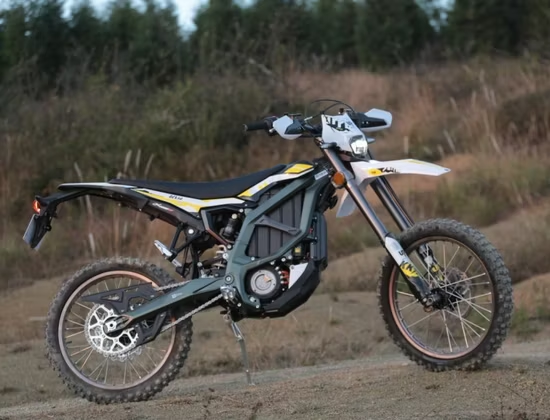
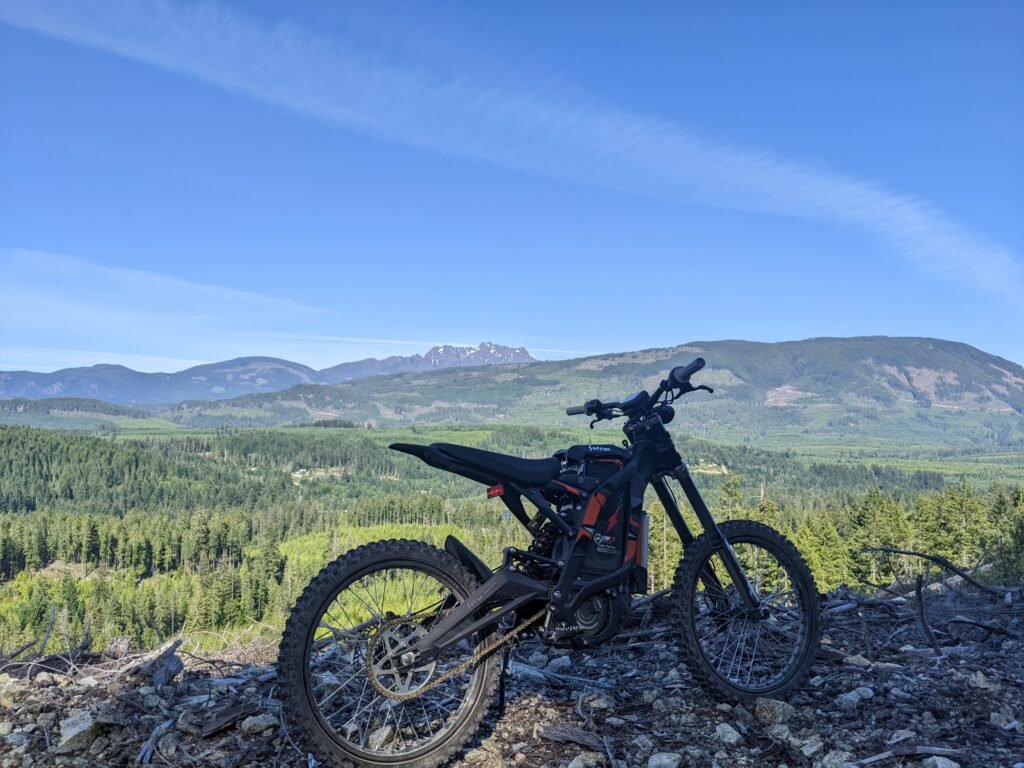
Buy the correct battery size for your needs — bigger batteries cost more and are heavier.
Ride more efficiently: using lower assist settings helps the battery last longer and lessens wear on the bike’s parts.
Do simple maintenance yourself: cleaning the chain, checking tire pressure, and inspecting brake pads are easy tasks that save money on labor.
Buy trusted aftermarket batteries with a warranty — cheaper, unknown brands may end up being more expensive over time.
Buy tires and parts in large quantities (if you ride a lot) to save money on each item.
Keep records to make your bike easier to sell later.
Think about used Sur-Rons if you’re okay checking the battery and mechanical condition to save money upfront. Cost of owning sur-ron.
Compare to gas dirt bikes: fuel & maintenance math
It’s tempting to ask: is the cost of owning a Sur-Ron cheaper than a small gas dirt bike? The answer usually is yes over time, but it depends on the comparison model.
Example: small 125cc 2-stroke/4-stroke dirt bike
Purchase price: varies — used 125cc can be $1,500–$4,000; new models $3,000–$6,000+.
Fuel: assume 60 mpg equivalent and $3.50/gallon gasoline, cost per mile ~ $0.058/mile vs Sur-Ron charging cost ~ $0.01/mile.
Maintenance: gas bikes require oil changes, carburetor work, valve checks — can run $300–$800/year depending on use.
Long-term engine rebuild vs battery replacement timing is a factor.
Rough comparison per 5 years (moderate use): cost of owning Sur-Ron often wins on running costs (charging + fewer engine services) though initial outlay can be similar depending on model choices.
Final recommendations and buying checklist
If you’re considering a Sur-Ron in 2025, here’s a practical checklist:
Decide intended use case (trail, commute, delivery). That determines battery size and whether you need street legality.
Try before you buy — test ride Light Bee X and any alternative models.
Inspect battery health (if buying used) and ask about cycle history.
Budget for accessories and protective gear — don’t skimp on safety.
Plan for one spare battery if you need multi-day range; plan for replacement costs in year 3–5.
Keep a maintenance ledger — good documentation helps resale.
FAQs (short answers)
Q: How much is a Sur-Ron battery replacement?
A: Expect $800–$2,500 depending on OEM vs aftermarket and capacity. High-capacity or branded packs are pricier; reputable third-party packs often land in $1,200–$2,000 range.
Q: How much does it cost to charge a Sur-Ron?
A: Very little — often $0.25–$1 per full charge depending on battery size and local electricity price. Example math: a 2.4 kWh battery at $0.15/kWh → ≈$0.40 per charge. Cost of owning a sur-ron.
Q: How often will I replace tires or brake pads?
A: Tires every 1,000–2,000 miles for aggressive off-road, less for moderate use. Brake pads vary by use but commonly replaced 12–24 months under recreational use.
Q: Will an aftermarket battery void warranty?
A: Often yes — check manufacturer policy. Third-party packs usually void OEM warranty on the electrical system, so weigh risk vs benefit. Cost of owning a sur-ron.
Closing: Is a Sur-Ron worth the money?
Short answer: Yes — if you ride often enough that the cost of owning a sur-ron is worth it, and if you take good care of the bike.
The Sur-Ron has low running costs (very cheap to charge), simple maintenance, good resale value, and a big aftermarket that helps reduce the hassle of owning it over time. After 3–5 years, a Sur-Ron can be about as cheap to own as a similar gas bike — often even cheaper to run — and it also offers other benefits: quieter rides, fewer mechanical problems, and a growing community of riders.
If money is your only concern and you don’t ride much, a used gas bike might cost of owning a sur-ron less upfront — but for daily commuters, delivery riders, or serious riders, the Sur-Ron’s mix of performance and lower operating cost of owning a sur-ron makes it a smart choice for the long
Table of Contents
Toggle